Planet
Plants, animals, and the land.
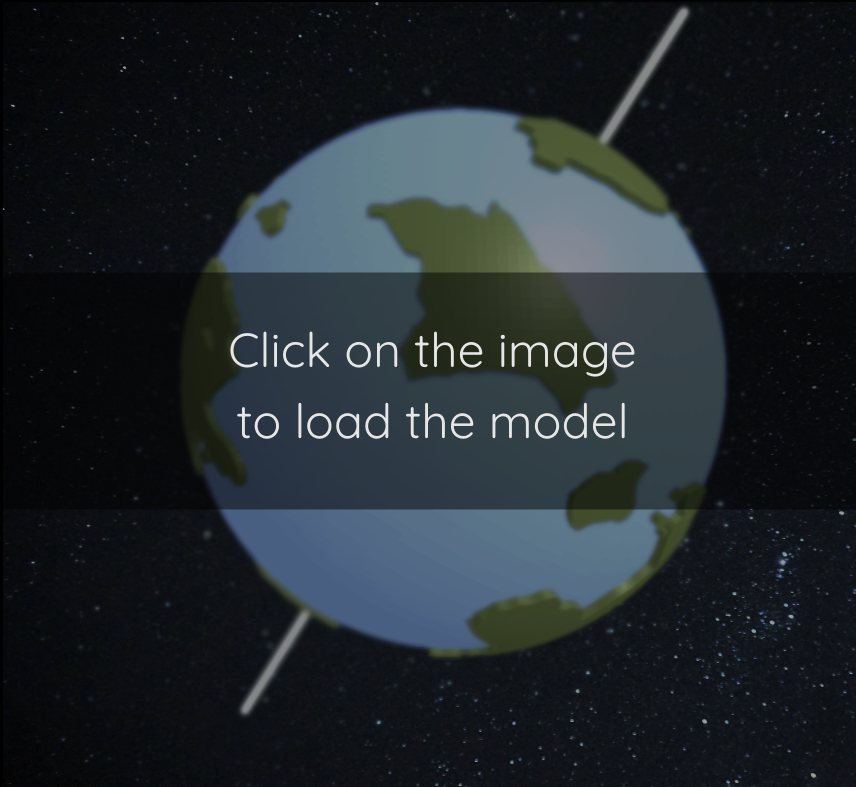
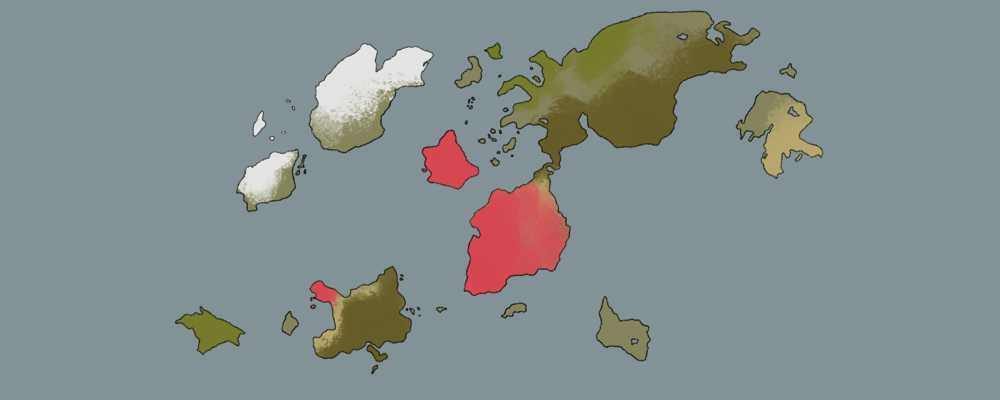
Mk°mih'oh is around 6 billion years old, and fairly new in its evolutionary lifetime, only seeing its first life forms 3 billion years ago. The majority of the world-building and story plot is done on K°epuhthenoh and the upper part of Au/hl/ihth.
Information created using assistance from Biblaridon and Artifexian's planet evolution video series on YouTube, found here and here.
To see the interactive 3D model of the planet Mk°mih'oh, view this site on a larger screen
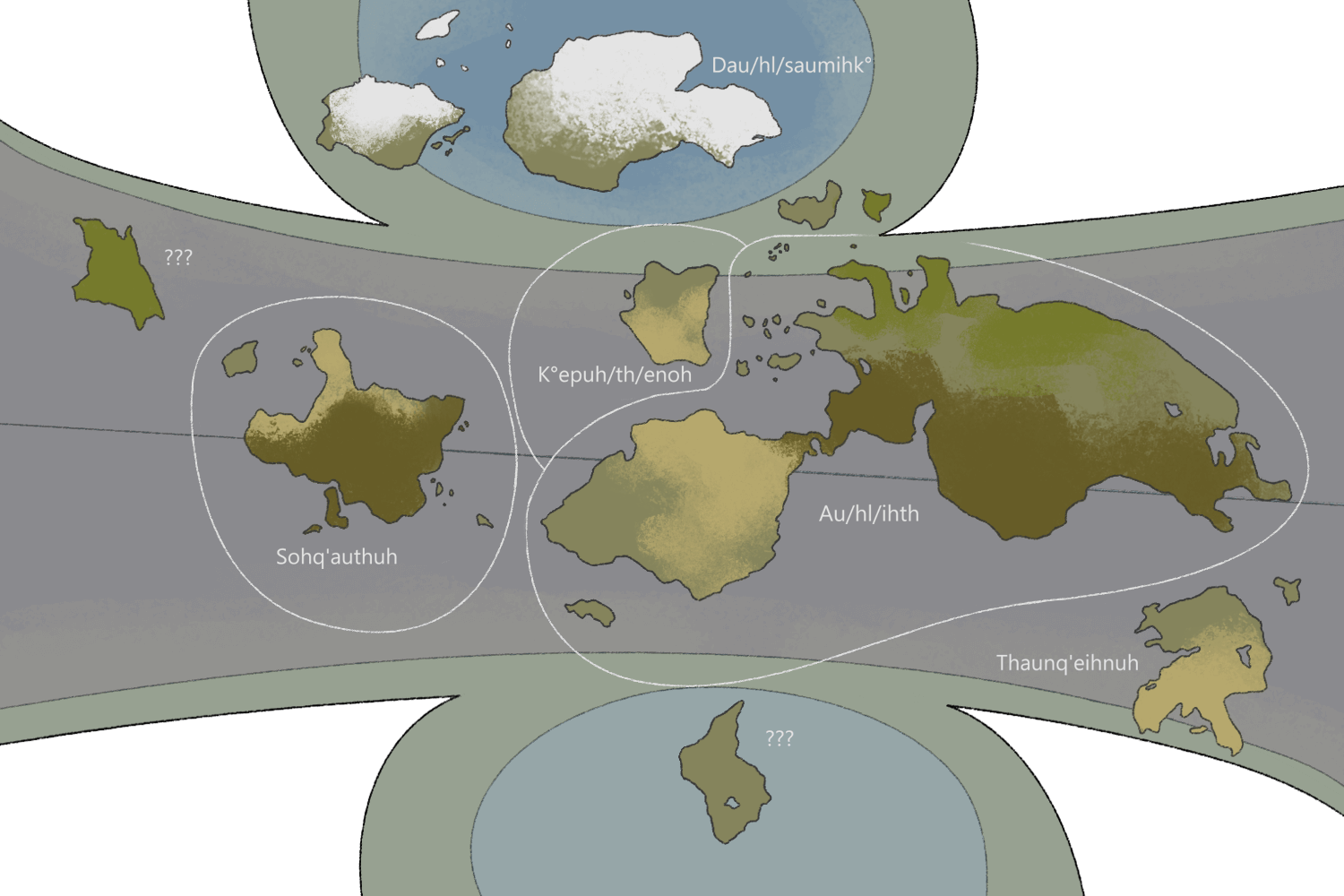
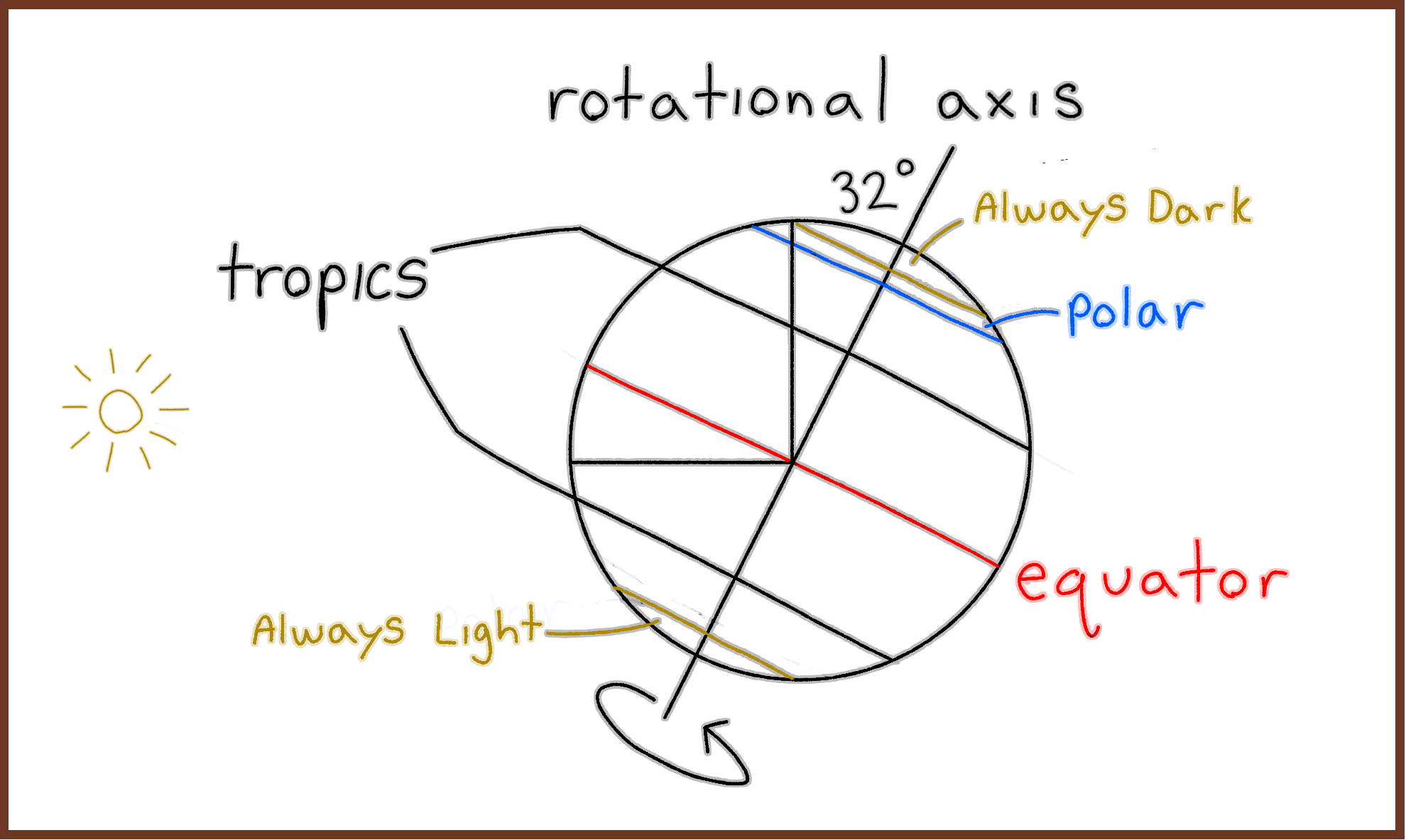
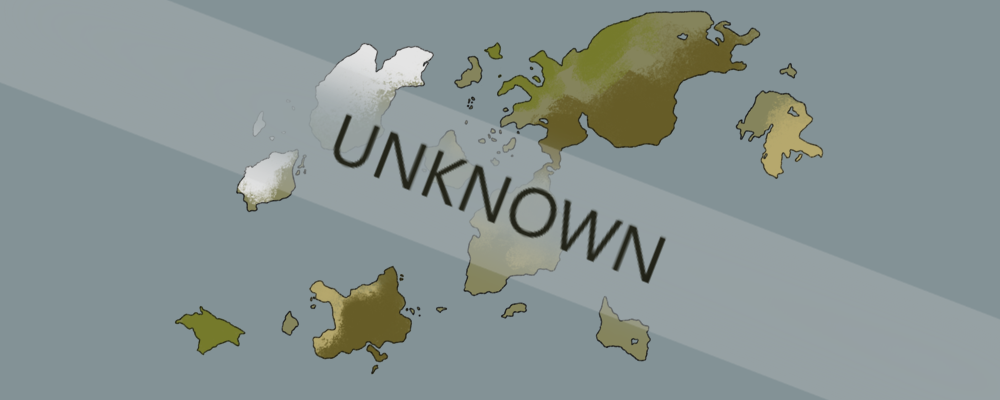
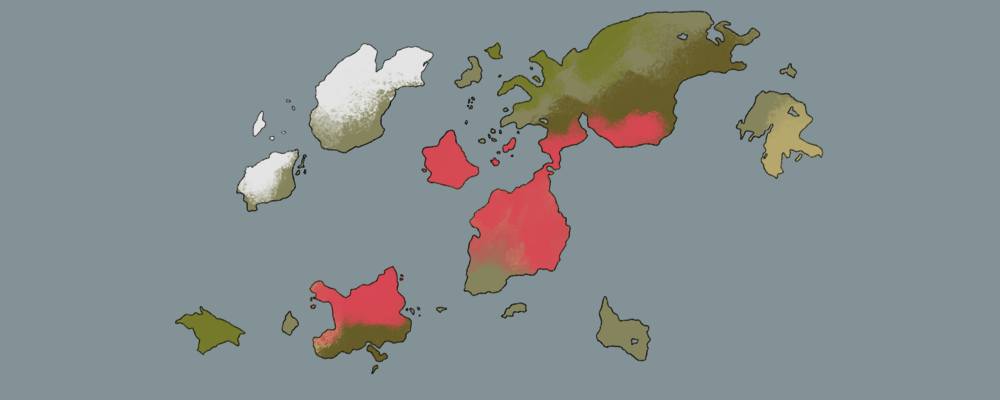
A majority of Dau/hl/saumihk° remains in constant darkness, while the entirety of the southern mystery continent is always in light, making both continents difficult — if not impossible — to inhabit for many species.
Note: 1 au = The distance from the Earth to the Sun.
Star Data
Mass: 1.2
Luminosity: 2.07 (m
Diameter: 1.14 (m
Surface Temp.: 1.1 (m
Lifespan: 0.63 (m
Limits: 0.12au → 48au
Solar System Limits: 0.12au → 48au
Habitable Zone: 1.372au → 1.97au (Mk°mih'oh at 1.43au)
Frostline: 6.98au
Smaller stars live longer but have worse planetary environments.
Mk°mih'oh's Moon
Radius: 0.28 (compared to Earth)
Mass: 0.01448 (compared to Earth)
Surface Gravity: 0.1848 (compared to Earth)
Distance: 2.108au (220 Earth radii)
Orbital Period: 55.072 (Earth) days Silicate Rock: 89%
Water/Ice: 2%
Iron: 9%
Note: Habitable planets must have a major moon. This moon has its own moon 69 Earth radii out that I don't want to do the math for.
Lunar Calendar
Year: 1008 days, 18 months (1007.705 days, 18.29795 months)
Month: 56 days (55.072 days)
Day: 28 hours (23.602 hours)
Hour: 10 minutes (50.576 minutes)
Meaning each minute on Mk°'mih'oh is equivalent to 5.0576 minutes on Earth.
Each month is the same length as one lunar cycle.
(Tentatively) There are 4 months of Spring, 7 of Summer, 4 of fall, and 3 of Winter.
Planet Data
Mass: 0.36
Radius: 0.65
Gravity: 0.85
Density: 1.55 (large iron core)
Velocity: 0.744 = 22 km/s
Orbital Eccentricity: 0.1
Semi Major Axis: AVG 1.43au, MIN 1.372au, MAX 1.428au
Axial Tilt: 32° spinning ccw
Rings: none
Note: Orbital eccentricity is how much an orbit deviates from a perfect circle, measured between 0 and 1.
Planet Climate
Equator has rainforests, tropics, savannahs, monsoons, etc.
Tropics: 32° N and S of equator
Polar: 58° N and S (90-32)
Note: Tilts greater than or equal to 54° switch tropics with poles
K°epuhthenoh and Auh/hl/ihth
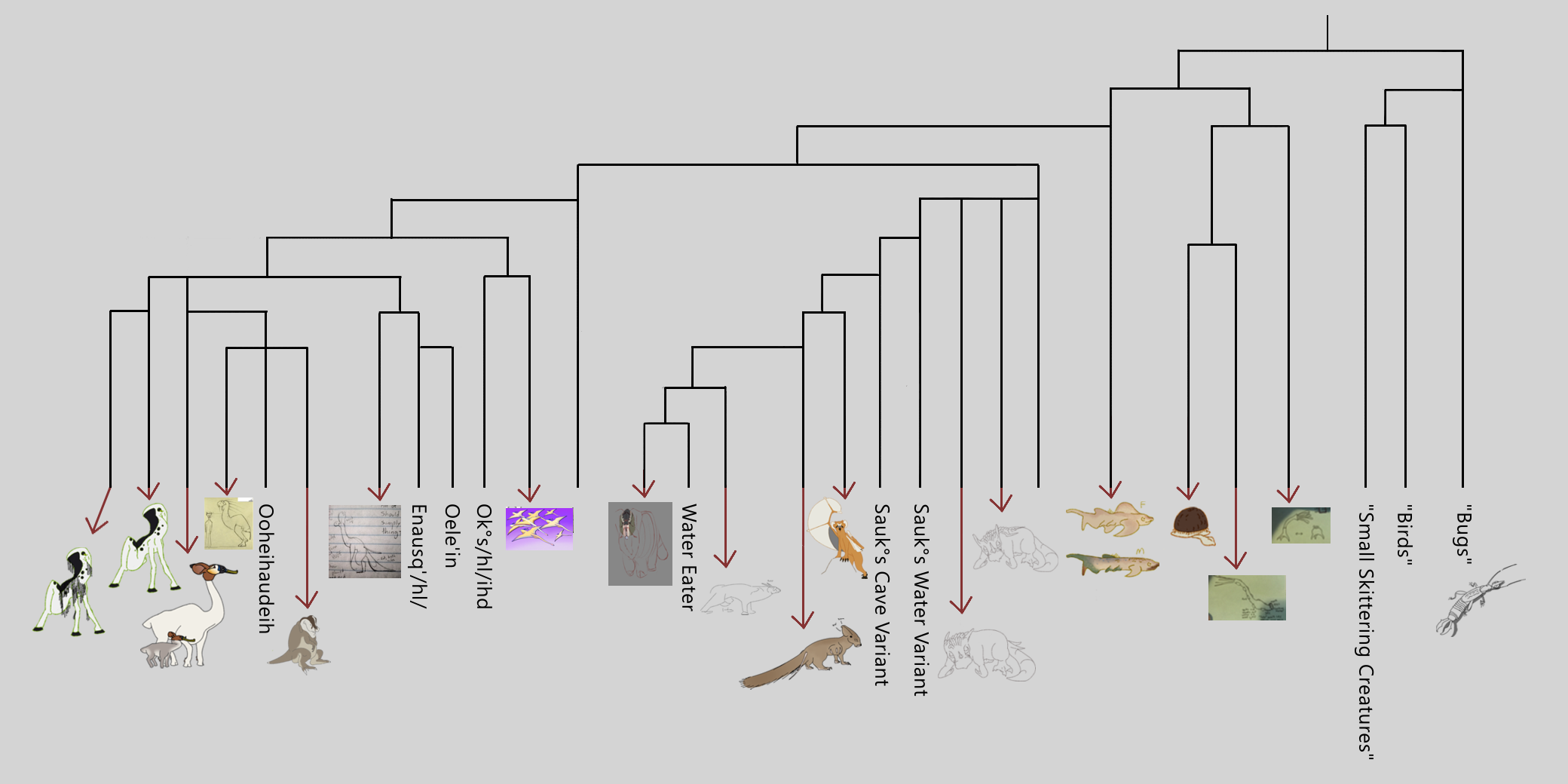
Cladogram of Mk°mih'oh's Creatures
Ok°s/hl/ihd
| Size and Weight: | 3.5ft body, 8ft wingspan/ 11lbs |
| Lifespan: | 20 years |
| Habitat: | The sky and waters |
| Diet: | Bugs and fish |
| Distant Ancestors: | Giraffe-life creature (?) |
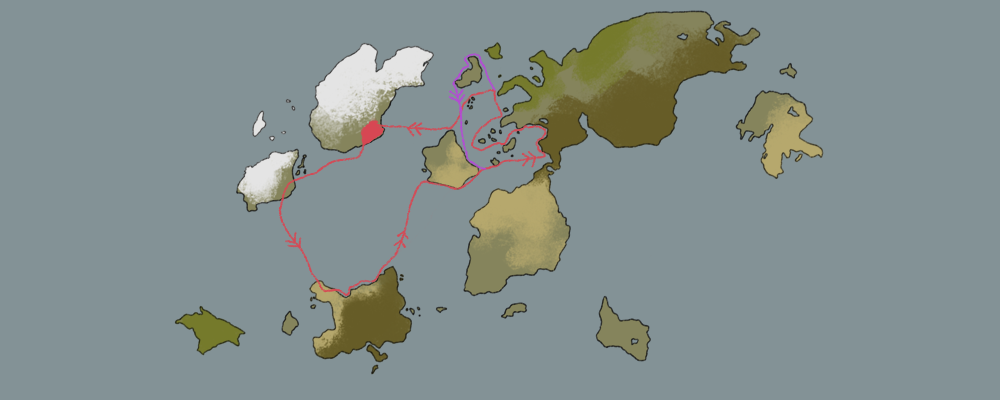
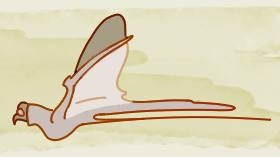
Ok°s/hl/id are used by Enausq'/hl/ to send messages to far off villages. They draw
them
to dry areas using their hands to splash into buckets of water, imitating the sound of
the sea.
They hold fish out for them, and
when they're close enough, slap various paint colors on parts of their body as code for
different things.
They typically travel in groups of 1000-4000 and move as a sort of hivemind. It is
highly
advised to not attack an Ok°s/hl/ihd. They are blind and weak, but in their large
numbers
their sharp beaks can do mass amounts of damage.
- They spend a majority of their lives in the air above water and rarely land. They are a yellowish-grey in color to camoflauge into the color of the sky when viewed at from below by fish.
- Their path through the land never changes, and they rarely move away from the exact trail, only changing occasionally or with the seasons so prey don't become sparse.
- They tuck their necks into their bodies during flight to increase their aerodynamics and keep their neck muscles from straining.
- They don't have eyes, but the black areas on their head work as sensors to determine night and day by sensing the suns light and heat.
- The sacks on their faces work to sense the environment around them using echolocation from the high pitched chirps they constantly let out. This allows them to stay in the same ordered group and on the same path.
Smau/hl/ Au/hl/etheoh/hl/ (Water-Eaters)
| Size and Weight: | 4ft / 120lbs |
| Lifespan: | 45 years |
| Habitat: | Coastlines and tropical wetlands |
| Diet: | Microorganisms, algae, plankton, small smails |
| Distant Ancestors: | --- |
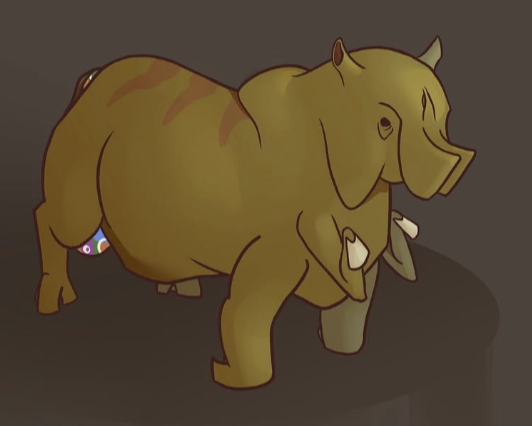
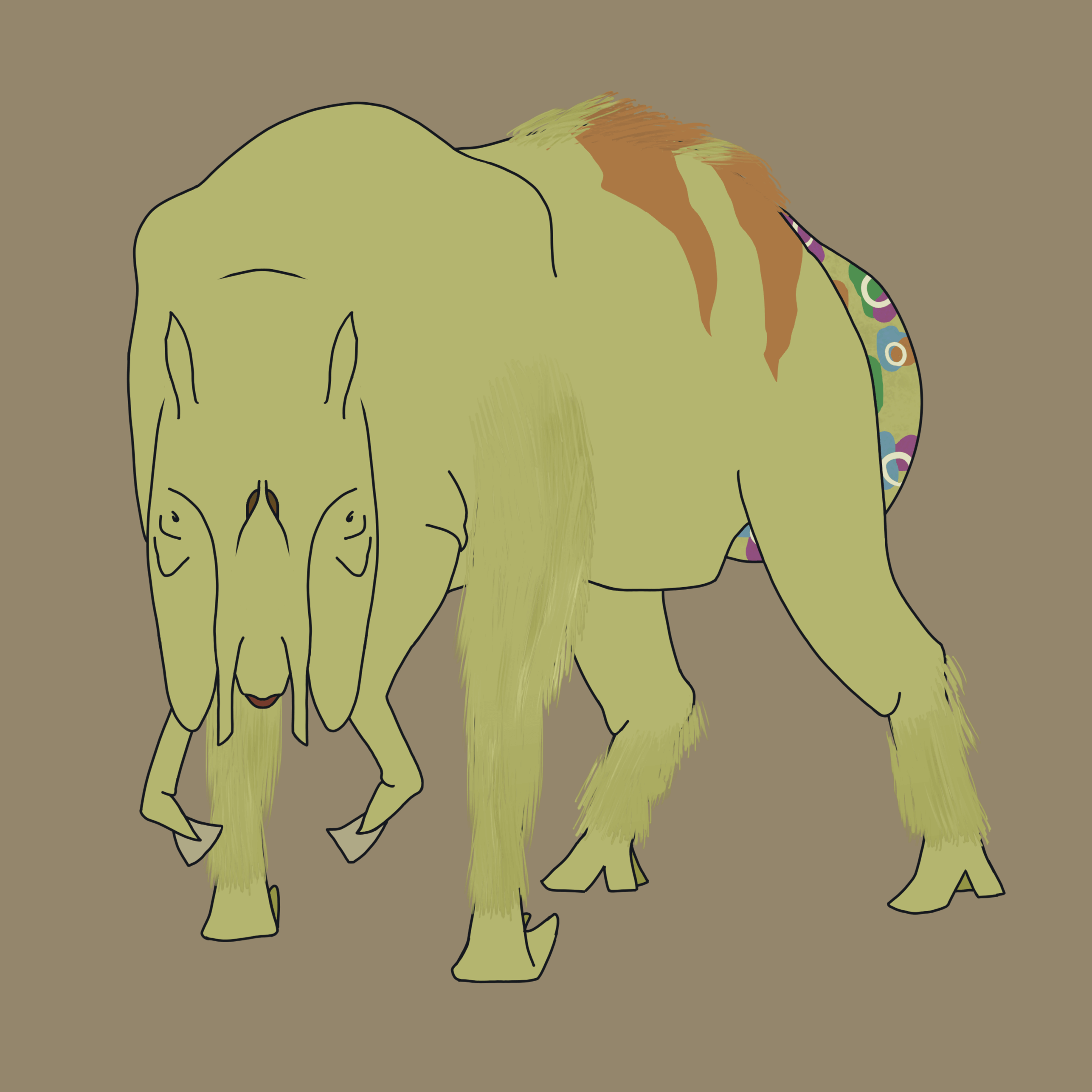
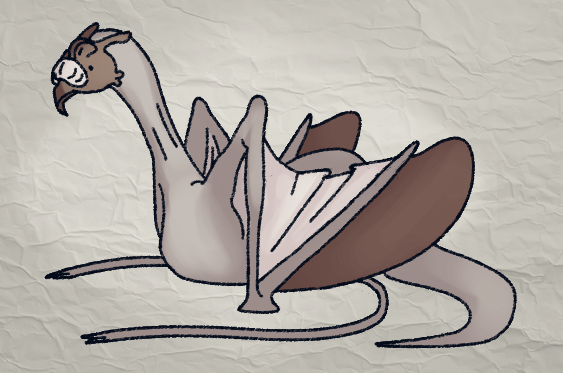
Water-Eaters are known for their style of feeding, which is to filter through water for bacteria and microorganisms using the same fibrous mouth as a Baleen whale.
- They use their two front appendages to scrape algae from rocks and stir up still water to feed more effectively. The two tusks work to effectively push away larger objects in the water.
- They have brightly colored back ends filled with poison in order to deter predators attacking while they feed.
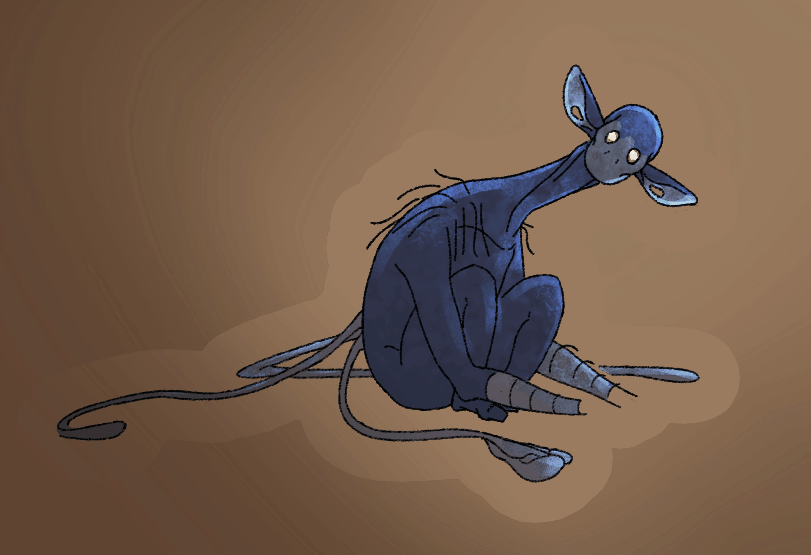
Enausq'/hl/
| Size and Weight: | 8ft, 200lbs |
| Lifespan: | 60 years |
| Habitat: | Hollow Paupuh trees in humid deserts |
| Diet: | Small mammals, large bugs, fruit, fish |
| Distant Ancestors: | Oele'in, unnamed large cretaure |
Oele'in
| Size and Weight: | 5ft / 110lbs |
| Lifespan: | 55 years |
| Habitat: | High treetops in dense rainforests |
| Diet: | Bugs, Small "birds", --- |
| Distant Ancestors: | Enausq'/hl/ |
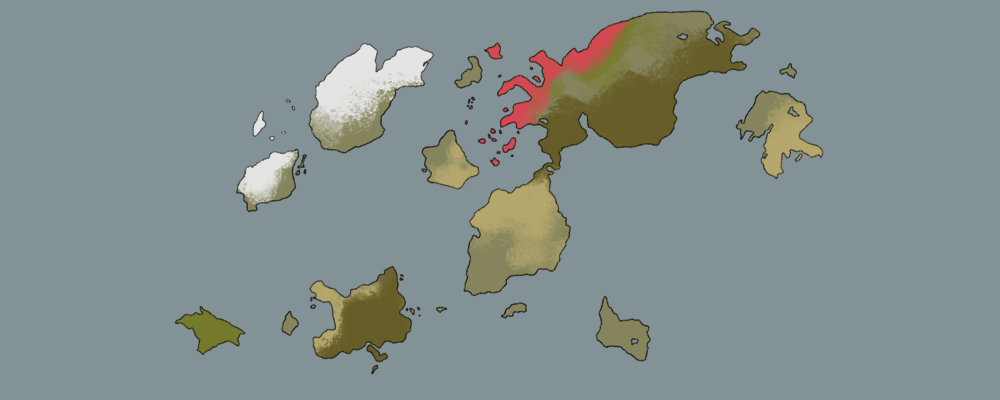
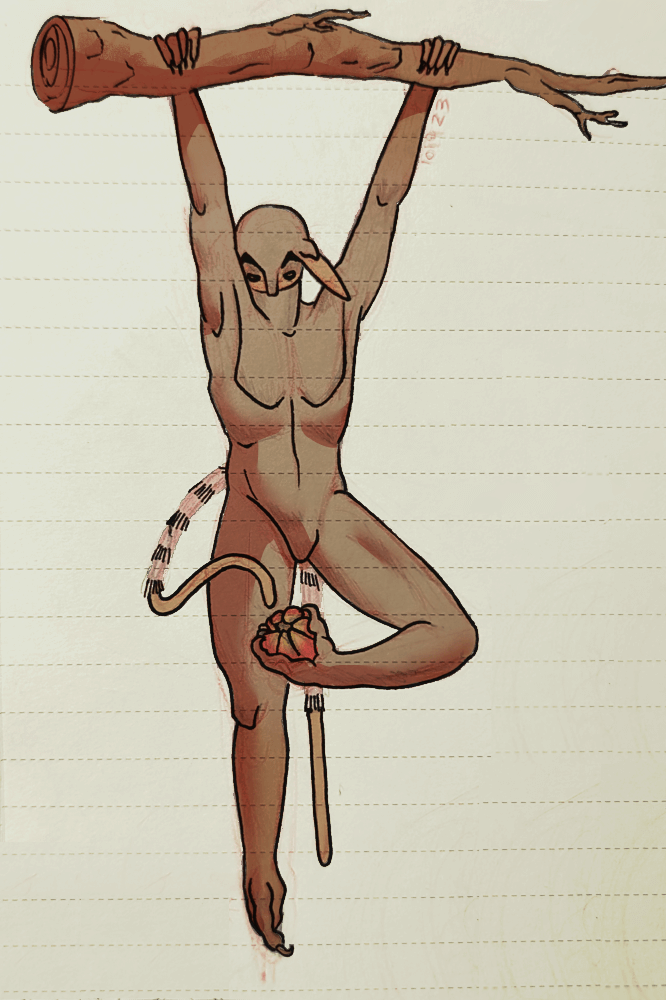
Oele'in are a sub-species of Enausq'/hl/, living on the nearby islands of Au/hl/ihth and possessing a few different traits.
- They are brown in color and patterned to blend into tree trunks.
- They're smaller than Enausq'/hl/ and dock their upper uhnuhnih/hl/uh at a young age to make maneuvering through branches easier.
- Their lower Uhnuhnih/hl/uh have very small and almost negligible fat storage sacks due to the abundance of food and restrictions the weight would cause.
Unnamed Creature #1
| Size and Weight: | 10ft, --- |
| Lifespan: | --- |
| Habitat: | --- |
| Diet: | --- |
| Distant Ancestors: | --- |
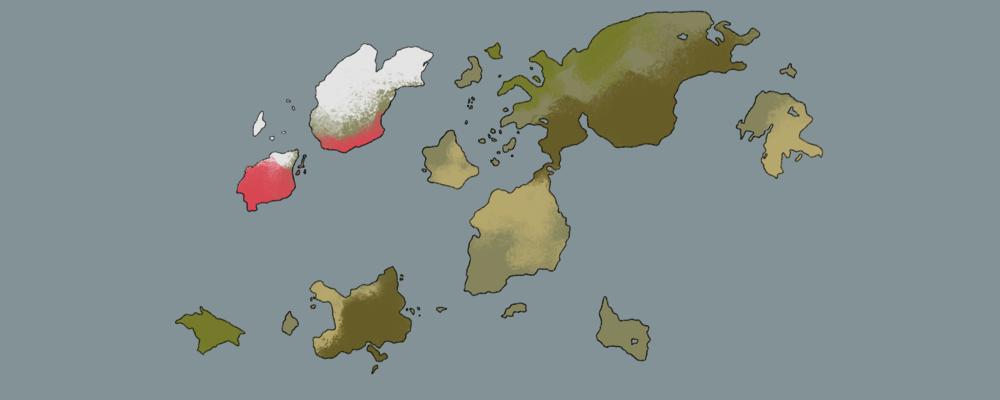
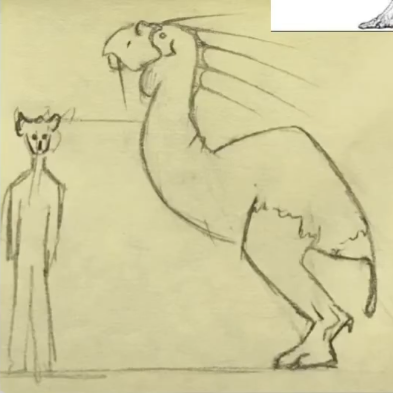
The only known inhabitants of the icy Dau/hl/saumihk° continent. They live on the edge of the dark zone, where only most days are full darkness.
Ooheihaudeih
| Size and Weight: | 8ft w/o horns, 900lbs |
| Lifespan: | 15-20 years |
| Habitat: | In and around denser forested areas. |
| Diet: | --- |
| Distant Ancestors: | --- |
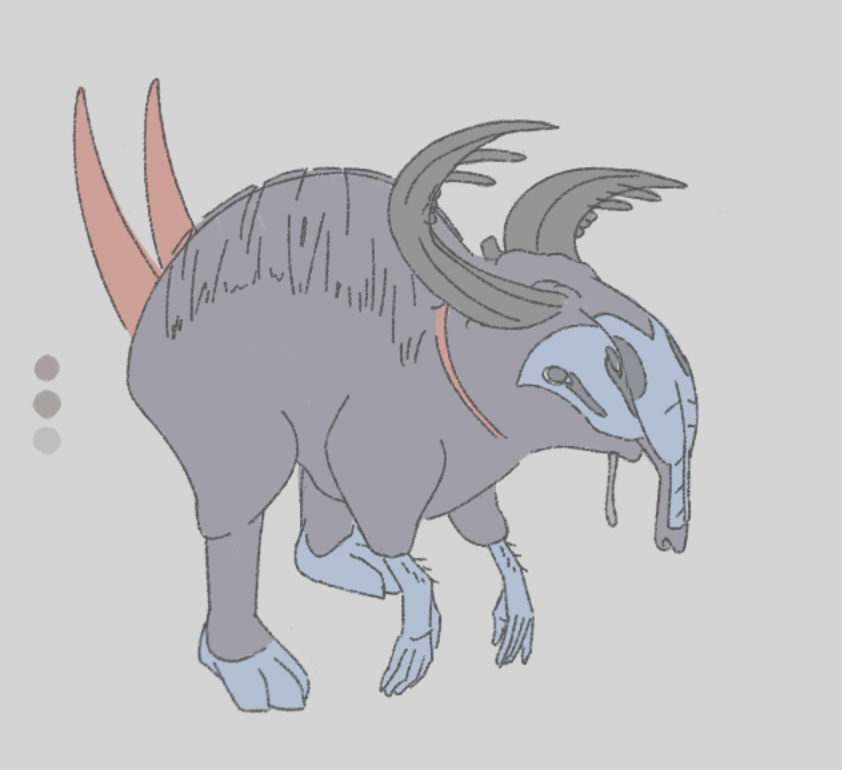
Built like a bison and as common as deer, many folklore tales revolve around Ooheihaudeih due to their uncomfortably dexterous hands and uncanny resemblance to an Enausq'/hl/ face. In the dark, it is an unwelcome sight.
- Killing them is slightly looked down on due to the resemblance, but their fur is the best source of hair extentions.
- They are herded by some, but because they are still dangerous, it is not extremely common.
- If you do kill one, their horns make wonderful weapons in combat, although horned combat is difficult to learn, and doing the needed alterations to the horns is not a common skill.
- The front of their faces are covered in a hard plate, where their noses lies attached at the bottom. They can drink water through their nose, but can't move this plate, so they have a long tongue to pick up food.
- They have four eyes, two to the sides and two at the front
Generic Fish #1
| Size and Weight: | 2.5ft long, 12lbs |
| Lifespan: | 7 years--- |
| Habitat: | --- |
| Diet: | --- |
| Distant Ancestors: | Unnamed Cave Creature (water to cave?) |
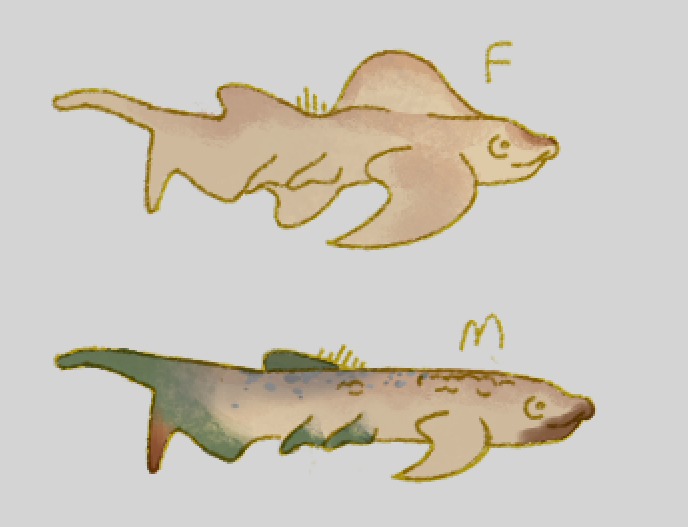
Yum! A common staple dish for those near the shores of K°epuhthenoh.
- Tastes like chicken...
Sauk°s
| Size and Weight: | 8in, 6lbs |
| Lifespan: | 20 years |
| Habitat: | Deep Caves and Mountain sides |
| Diet: | Dark Green and Red Glow Moss |
| Distant Ancestors: | Generic Fish #1 (water to land to cave) |
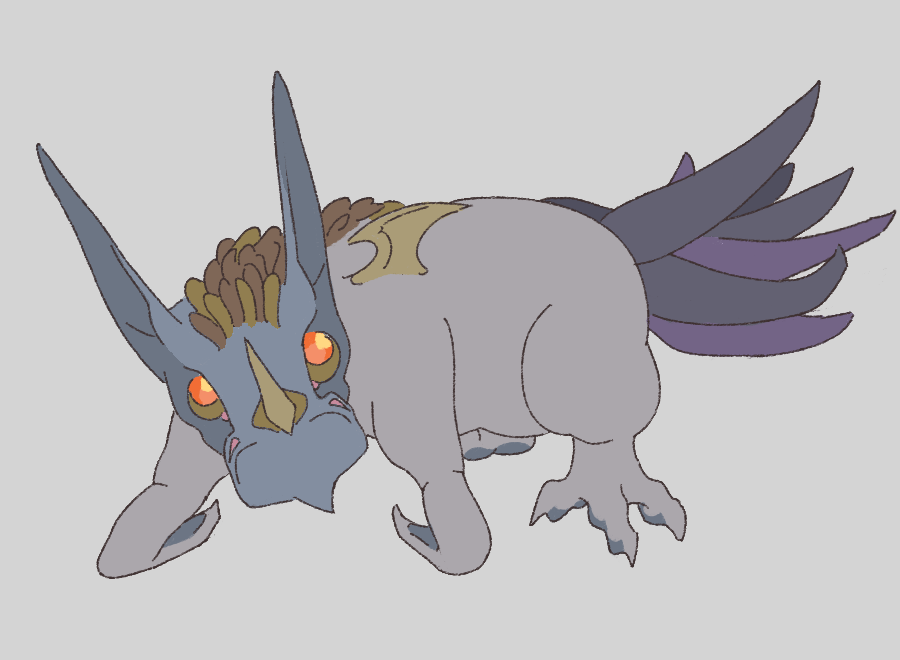
Sauk°s are a diverse species of creature. The kind in the photo to the left are the cave variant, who enjoy digging shiny gems out of cave walls
Other variants are green in color and spend their time in marshy environments digging through mud and eating bugs.
Unnamed Creature #2 (AKA "Stump Guy") (wip name: duhduh' oheihlaun°)
| Size and Weight: | 5in to 1.5ft, --- |
| Lifespan: | 5 to 10 years |
| Habitat: | --- |
| Diet: | --- |
| Distant Ancestors: | --- |
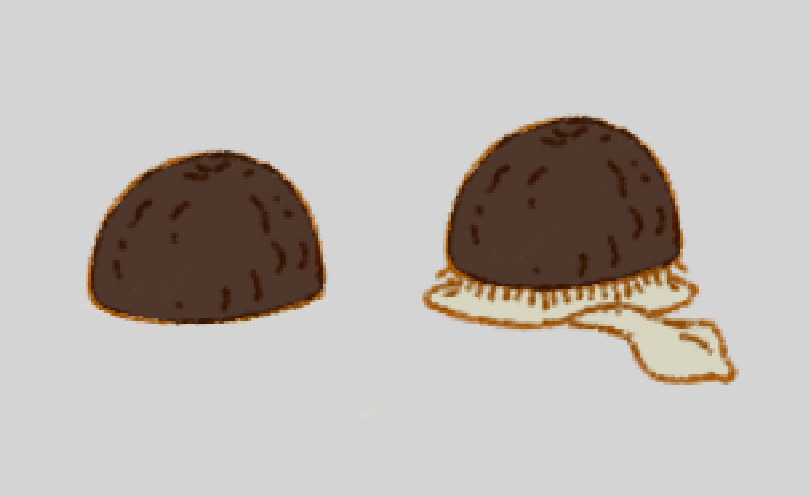
Creatures evolved to be nearly identical to common plants resembling ground-residing tree burls. Generous in number and easy to spot if you know slipping a finger under their shell tickles them.
- They raise their shells slightly off the ground to snatch prey with their appendages like a trapdoor spider.
- A staple dish for Enausq/hl/, their insides are goopy and fat, similar to that of a cockroach.
- Their emptied shells are commonly used for bowls which store grains and water in the short term.
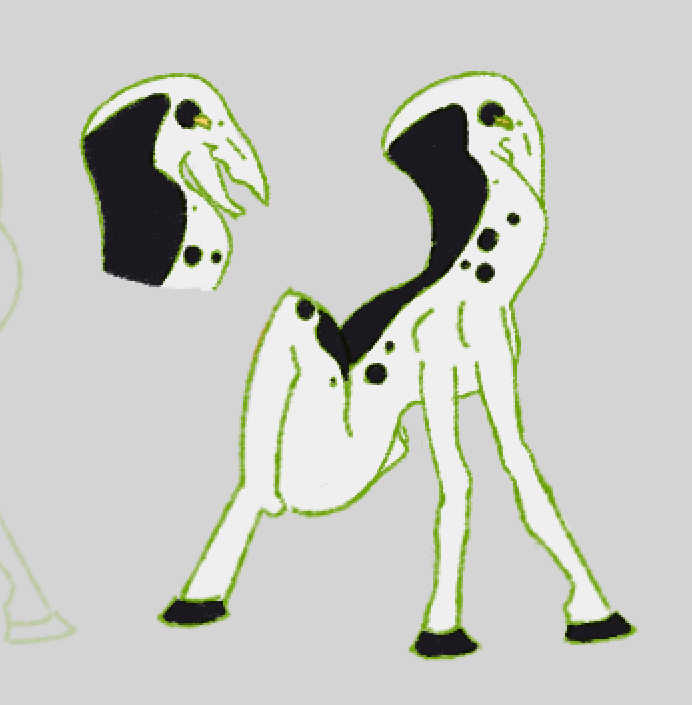
Unnamed Creature #3 (AKA Giraffe-like creature)
| Size and Weight: | 50 ft, --- |
| Lifespan: | 80 years |
| Habitat: | Large open plains |
| Diet: | --- |
| Distant Ancestors: | Unlisted duck-like creature |
K°epuhthenoh
Glow Moss
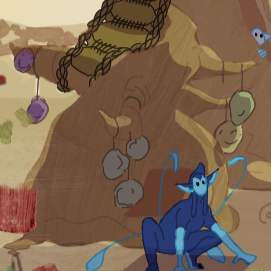
Glow Moss is a thin and brittle plant that grows on rocks and trees, most often on the dark side of mountains and at the entrance of caves. It glows faintly when crushed, and is often collected by Einasvel and hung on the branches of their homes to be used to find the way at night. When the sun sets, they go around and crush all of the bundles.
The color is based on the nutrients and their levels where it grew, and ranges wildly. Some examples are (from most to least common):
- Dusty blue grows in dry locations with lots of direct sunlight.
- Lilac in locations with more indirect than direct light. It grows the longest out of any other variation at around two feet.
- Green
- Yellow
- Pale red-orange
- Dark green. Glows the dimmest. Commonly used to create hairstyles. in places with low direct light and heavy water.
- Deep red grows in wetter areas with low indirect light, such as the sides of large rock formations and caves. It's a common meal for creatures in the area who don't have much else to eat, so it grows short and dark to blend into the environment. It is hard to remove and is much softer than other variants.